Projects
Rigden
Creative Partner

Overview
RIGDEN is a research-led tabletop strategy game that translates the idea of “Mythical Urbanism” into an interactive design system. The project began with a question: how do myths, rituals, and belief systems shape real spaces, social decisions, and forms of governance? Instead of presenting the research only as a written thesis, I transformed it into a playable board game where players experience myth as a system of rules, power, conflict, and negotiation.
The final game is set in Shambhala during the Kali Yuga, an age of decline. Players take on the role of lineage holders competing to become the next Rigden King. To win, they must realign districts, use Tattva cards strategically, invoke Dharma Kings, negotiate with other players, and prove that their internal frequency is aligned with the city.
Project Type:
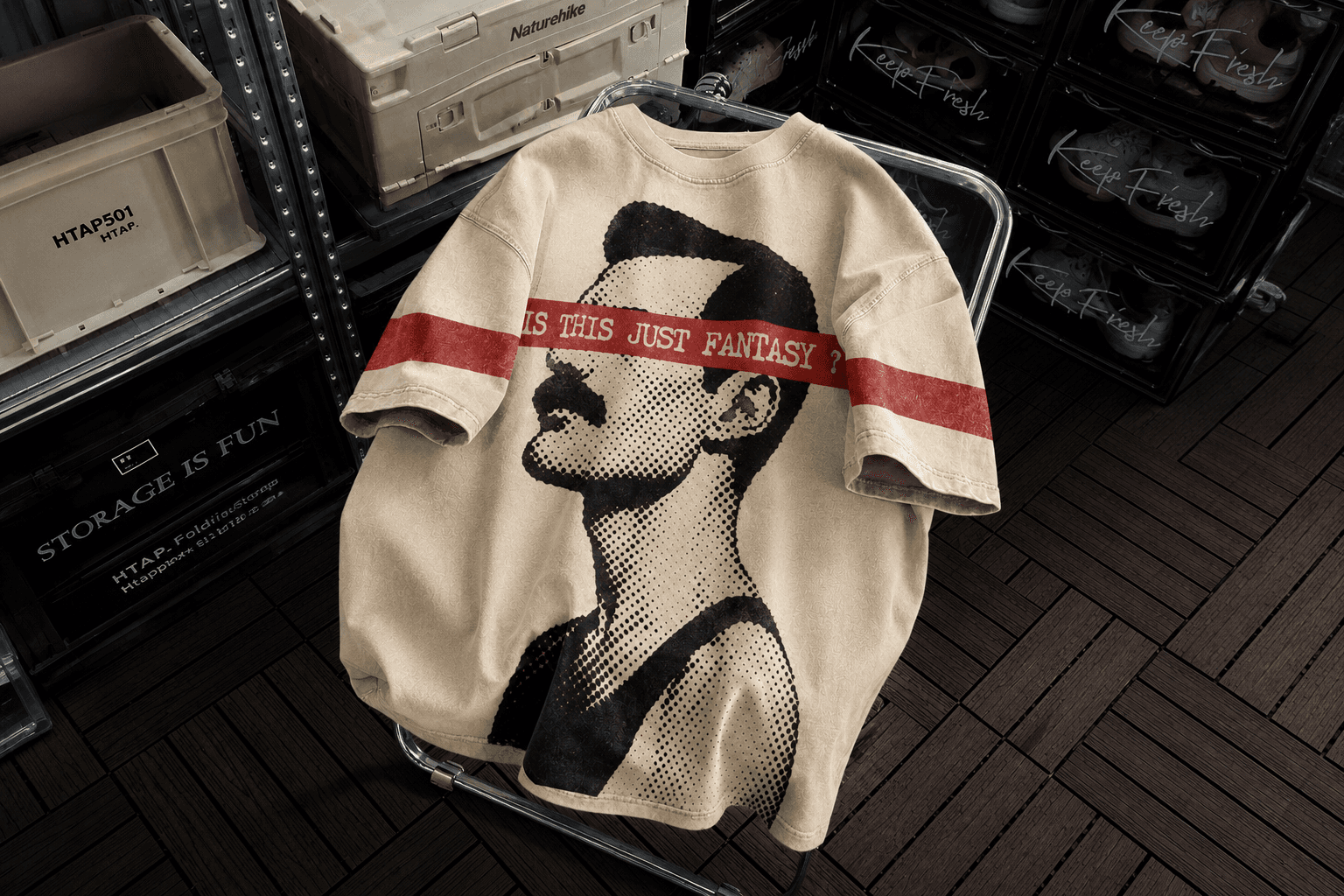
Apparel graphics, product mockups, startup brand collaboration
Brand:
Barnini — early-stage clothing / T-shirt startup
My role:
Creative Partner, T-shirt Graphic Designer
Contribution:
Designed around 15 T-shirt concepts, created mockups, explored product themes, typography, colorways, and future design directions
Audience:
Youth fashion audience, streetwear-inspired buyers, music and graphic T-shirt consumers
Visual direction:
Bold, expressive, slightly grunge/streetwear-inspired, music-led, typography-heavy, illustration-focused
Output:
T-shirt graphics, mockup visuals, theme explorations, design ideas for future drops
Collaboration type:
Paid startup collaboration, per-design contribution


The world behind the game
The research began by looking at Indian cities where mythology is not just symbolic, but spatial. I studied examples such as Varanasi, Madurai, Ayodhya, and Jaipur to understand how stories, rituals, cosmograms, and sacred geometries influence urban form. These cities showed me that myth can act like an invisible planning system, shaping movement, architecture, economy, and hierarchy.
This helped me define the central design opportunity: instead of treating myth as a static story, I wanted to understand it as an operating system. The project became a way to ask how ancient belief systems can be mapped, interpreted, and translated into a contemporary interactive experience.
worldbuilding to gameplay
One of the strongest insights came from observing possession as a system of transformation. The Gurs displayed different energies — calm, agitated, and fierce — which led me to question what internal structure allows a human body to become a vessel for a deity. Through interviews and research, I connected this to the idea that possession is not only an external force entering the body, but an activation of internal elemental qualities.
This insight helped me move from documentation to design translation. I began to see ritual as a mechanic: a person enters a changed state, channels a power, performs an action, and affects the community. This became an important bridge between cultural research and game design. In the game, players similarly invoke powers, alter outcomes, and compete to manifest control over the city.