Projects

Overview
RIGDEN is a research led tabletop strategy game that translates the idea of “Mythical Urbanism” into an interactive design system. The project began with a question: how do myths, rituals, and belief systems shape real spaces, social decisions, and forms of governance? Instead of presenting the research only as a written thesis, I transformed it into a playable board game where players experience myth as a system of rules, power, conflict, and negotiation.
The final game is set in Shambhala during the Kali Yuga, an age of decline. Players take on the role of lineage holders competing to become the next Rigden King. To win, they must realign districts, use Tattva cards strategically, invoke Dharma Kings, negotiate with other players, and prove that their internal frequency is aligned with the city.
Project Type:
Project Focus:
Final Output:
Core Theme:
My Role:
Key Contributions:

Research Starting Point: Myth as an Urban System
The research began by looking at Indian cities where mythology is not just symbolic, but spatial. I studied examples such as Varanasi, Madurai, Ayodhya, and Jaipur to understand how stories, rituals, cosmograms, and sacred geometries influence urban form. These cities showed me that myth can act like an invisible planning system, shaping movement, architecture, economy, and hierarchy.
This helped me define the central design opportunity: instead of treating myth as a static story, I wanted to understand it as an operating system. The project became a way to ask how ancient belief systems can be mapped, interpreted, and translated into a contemporary interactive experience.
Field Research in Himachal Pradesh
The project became more grounded when the research moved from mythic cities to Himachal Pradesh, especially Naggar. Here, myth was not frozen in architecture; it was still active through ritual, possession, and community decision making. I observed possession rituals where local deities spoke through Gurs, or oracles, and interacted directly with village life.
This fieldwork changed the direction of the project. I realized that in Himachal, myth operates as a living social system. The deity is not treated as a distant symbol, but as an active authority who can judge, heal, guide, and intervene. This observation became the foundation for designing a game where invisible belief systems become visible through player actions.


From Ritual Observation to Design Insight
One of the strongest insights came from observing possession as a system of transformation. The Gurs displayed different energies, calm, agitated, and fierce which led me to question what internal structure allows a human body to become a vessel for a deity. Through interviews and research, I connected this to the idea that possession is not only an external force entering the body, but an activation of internal elemental qualities.
This insight helped me move from documentation to design translation. I began to see ritual as a mechanic: a person enters a changed state, channels a power, performs an action, and affects the community. This became an important bridge between cultural research and game design. In the game, players similarly invoke powers, alter outcomes, and compete to manifest control over the city.
Translating Samkhya Philosophy into Game Logic
To give the project a clear structure, I used Samkhya philosophy and the 25 Tattvas as the conceptual framework. The Tattvas describe reality as a hierarchy of principles, moving from gross matter such as earth, water, fire, and air toward mind, ego, intellect, and pure consciousness. This hierarchy gave the game a logical system for value, progression, and conflict.
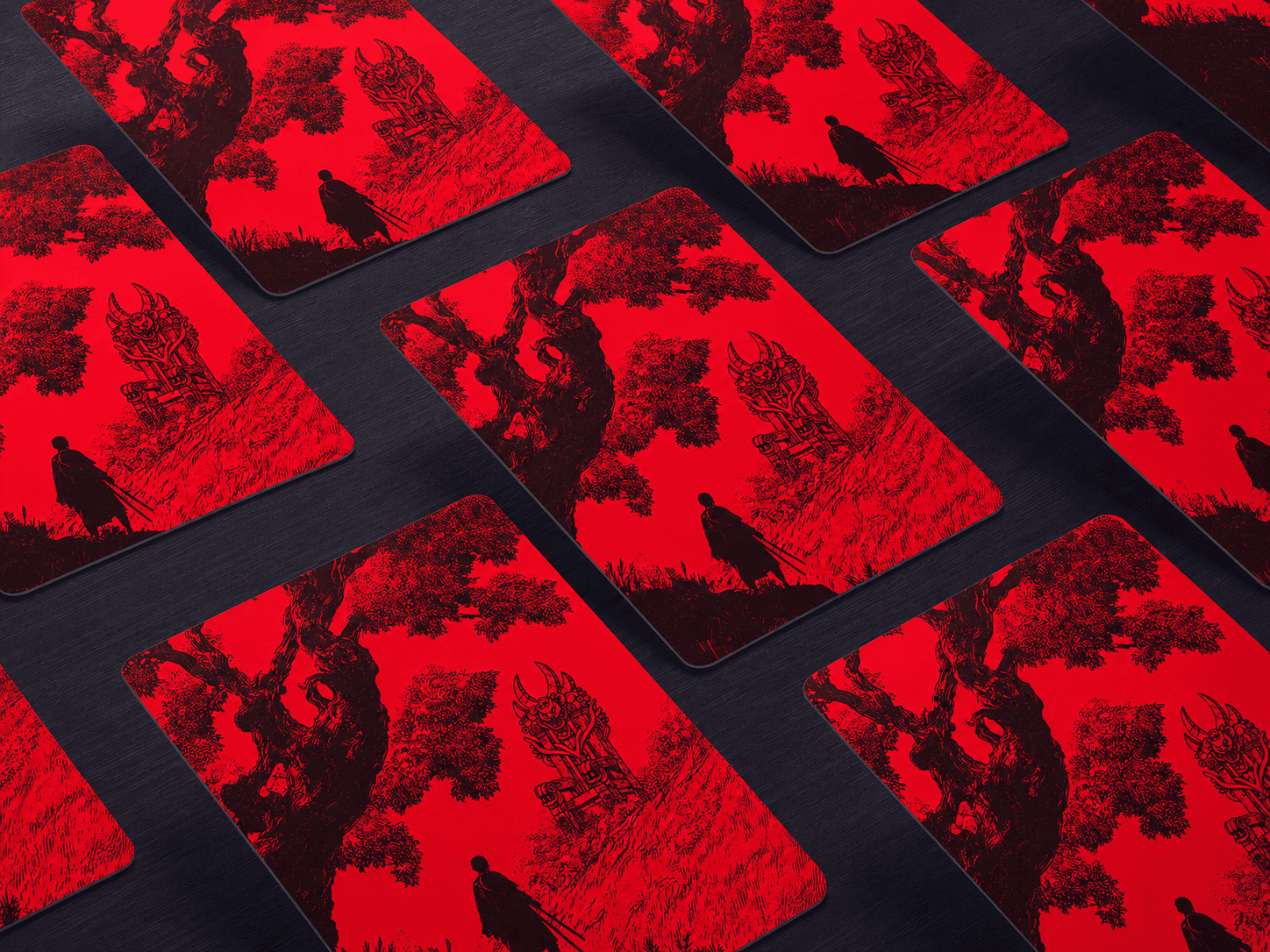
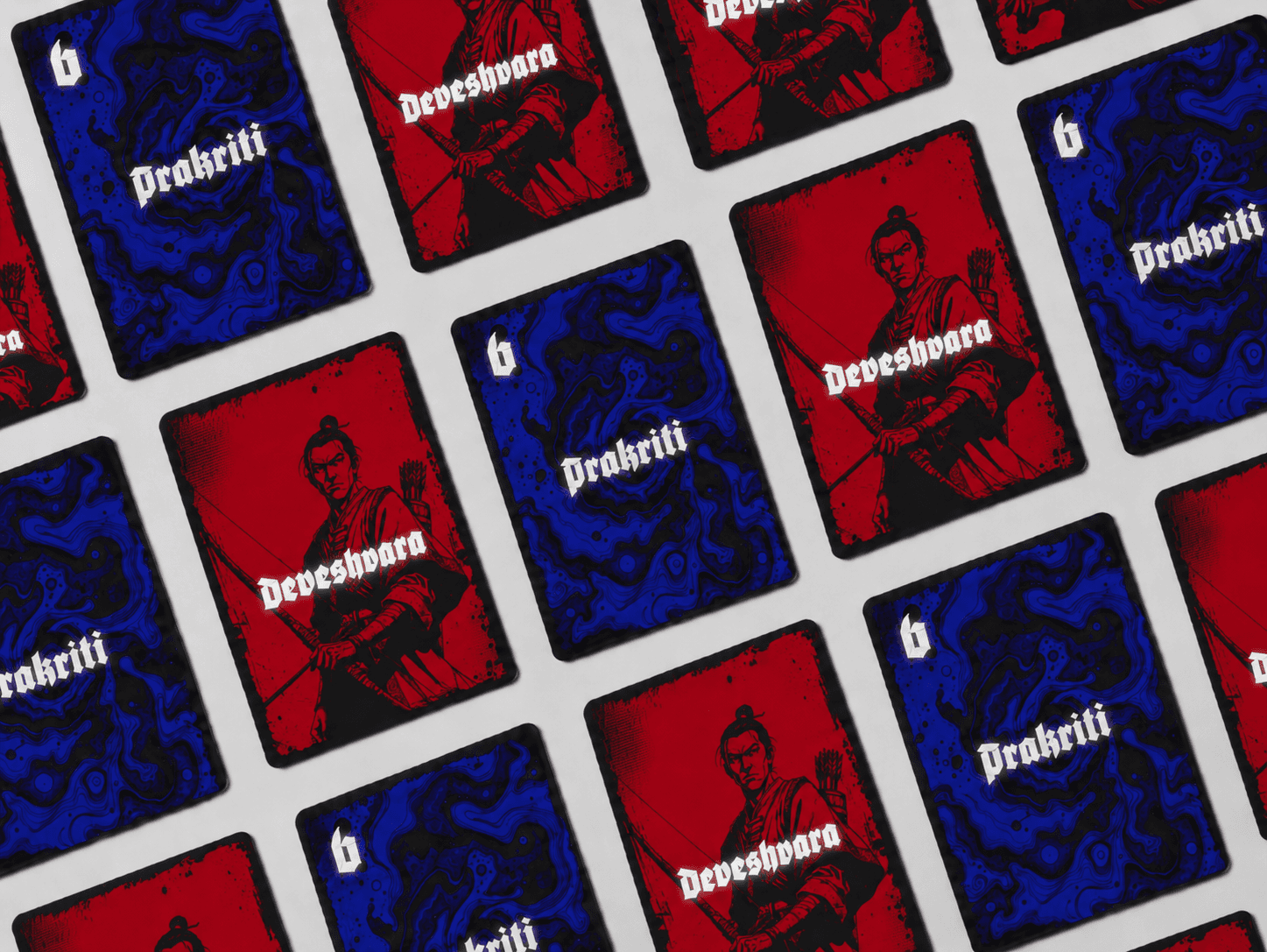
In the final game, Tattva cards became the main resource players use to build resonance and compete for districts. Each card has a number, allowing players to understand the gameplay immediately, while the Sanskrit names and symbolic references invite them to learn more about the philosophy behind the system. This allowed the game to remain playable without requiring prior knowledge of Samkhya.


Building the World of Shambhala
Shambhala became the spatial and narrative model that brought the research together. It offered a mythic city structure, an eight-part sacred geography, and the lineage of Rigden Kings. The idea of Shambhala as an ideal city allowed me to connect urbanism, spirituality, hierarchy, and gameplay into one world.
In the game, Shambhala is represented through eight district cards placed at the center of the table. These districts become the contested spaces players try to realign and control. The city is not just a background story; it becomes the board itself. Players are not simply collecting points, they are competing to restore order to a broken sacred geography.
Translating Research into a Playable Framework
After building the research foundation, the main design challenge was to convert abstract cultural ideas into a structure that could be played. The project could not remain only as documentation of myths, rituals, or philosophy. It needed to become a system where players could make choices, experience conflict, manage power, and understand how symbolic systems influence outcomes.
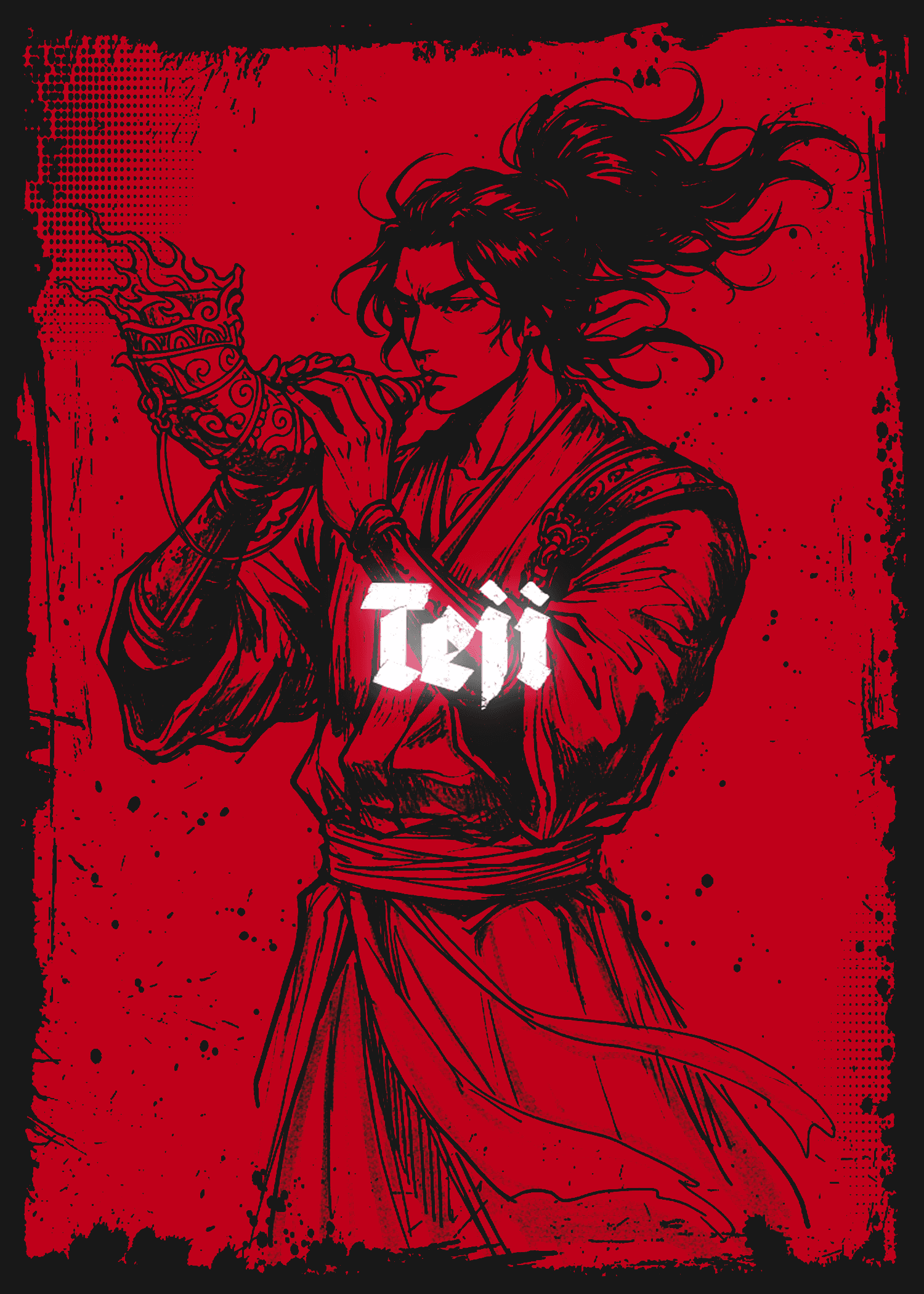
I began by identifying the core patterns from the research: possession as transformation, Tattvas as internal energies, Shambhala as sacred geography, and the Rigden King as a figure of alignment and authority. These ideas were then translated into game elements. Districts became spaces of control, Tattvas became playable resources, Dharma Kings became special powers, and councils became moments of negotiation and conflict.
This stage was about simplifying the research without weakening it. The goal was not to explain every philosophical detail to the player at once, but to turn the research into actions: draw, invoke, absorb, pass, challenge, and control. This helped the project move from a thesis topic into an interactive design artifact.



Designing the Game System
RIGDEN was designed as a competitive strategy game for 2 to 6 players, combining area control, hand management, drafting, bluffing, and negotiation. The game is played on a modular map made of eight district cards, representing the sacred geography of Shambhala. Players compete to control these districts by playing Tattva cards and building the highest “resonance” during each council.
The gameplay system was built directly from the research. Tattva cards became the main resource, Dharma King cards introduced moments of divine intervention, and the Wheel of Time token allowed players to challenge existing control over districts. The game also uses cycles of scarcity and renewal, where players must carefully manage their hand, read opponents, and decide when to invoke, absorb, pass, or fight for control.
The win conditions were designed to reflect the idea of restoring harmony to Shambhala. A player can win either by controlling three districts of the same colour, called the Perfection of the Ray, or by controlling five districts in total, called Grand Dominion. This made the game not just about capturing space, but about aligning strategy with a symbolic system.


Components, Manuals & Final Outcome
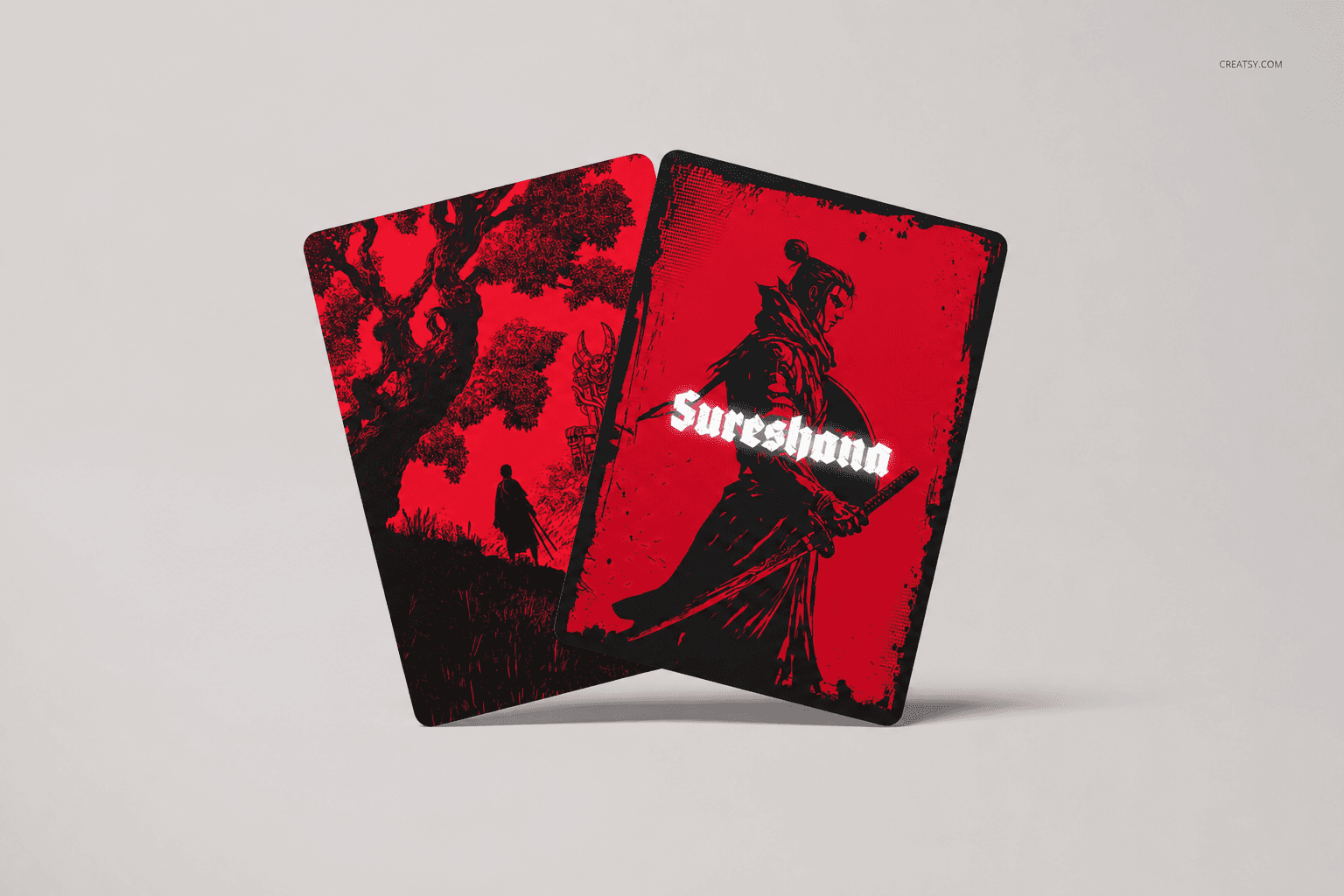
The final tabletop prototype included a complete set of physical components: district cards, Tattva cards, Dharma King cards, the Wheel of Time token, the Seal of Silence token, instruction manuals, card reference booklets, and the game box. Each component was designed to help players enter the world of the research while still keeping the gameplay understandable and playable.
Because the project was based on complex cultural and philosophical ideas, the manuals became an important part of the design. I created supporting booklets to explain the Tattvas, Dharma King powers, player actions, council structure, and game flow. These manuals helped bridge the gap between academic research and player experience, allowing the audience to engage with the mythology without needing prior knowledge.
The final outcome was a playable research artifact. Instead of presenting myth, ritual, and philosophy only through text, RIGDEN allowed people to experience the system through decision-making. Players had to negotiate, compete, manage scarcity, invoke powers, and reshape the city. This project helped me understand design as translation: turning dense research into an interactive, physical, and memorable experience.
